
KENYAN GROWERS · CULTIO NURSERIES
Avocado growing guide in Kenya
A practical avocado growing guide for Kenyan farmers: choose planting material, plan your site, establish the crop and prepare for market.
Source-based growing information. Confirm variety, rootstock and a site-specific plan with your county extension officer before planting.
On this page
Overview
Build an avocado orchard around your farm, not a promised yield. For growers in Uasin Gishu, Trans Nzoia and Nandi, the first decisions are drainage, reliable water, planting material and a route to market. A county name alone cannot establish suitability: a sheltered slope and a wet valley bottom can behave very differently. Start with a small, well-managed block if you are testing a new site.
Choose a variety
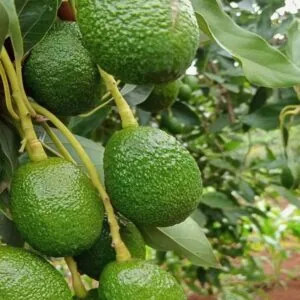
Hass and Fuerte are different varieties; ask about the identity of both scion and rootstock before ordering. Plan pollination with your adviser and check flowering overlap on your site. Keep a planting map so future pruning, harvest and sales records can be traced to each variety. A fruit photograph shows the crop, not the size or condition of the seedling you will collect.
Site selection
Walk the land after rain and identify standing water, compacted patches and routes for runoff. Avocado roots need good drainage. Before buying a full block, arrange a soil test and discuss any history of root rot. Budget for wind protection and dry-season water in advance. Do not assume that raising a planting mound alone will solve a poorly drained field.
Planting
Peg the orchard before digging, leaving room for boundaries, access and water lines. Conventional avocado guidance commonly uses wider spacing than intensive orchards: compare 7 × 7 m and 8 × 8 m as planning examples, then confirm variety and mature canopy requirements locally. Fuerte can need more room. Plant with the root ball intact, retain the nursery soil level and keep the graft union clear of soil.
Ongoing care
Check moisture in the root zone rather than following a fixed timer through every season. Keep mulch away from the trunk, control competing weeds and inspect ties as the stem grows. Use soil and, where appropriate, leaf analysis to plan nutrition. Record survival and replacements after planting; those records are more useful than treating every original planting position as an established tree.
Pests and diseases
Inspect trees regularly for declining growth, damaged roots, leaf symptoms and fruit injury. Poor drainage is a major root-rot risk; investigate the cause before adding more water or fertiliser. Seek a diagnosis from an extension officer when symptoms persist. Keep tools clean and use only locally registered crop-protection products according to their labels and harvest intervals.
Harvest
Agree maturity, grading and collection arrangements with the buyer before harvest. Do not pick fruit simply because it is large. Use clean crates, avoid dropping fruit and separate damaged produce. Record kilograms harvested, rejected and sold, plus transport and labour costs. Actual farm records should guide expansion; a neighbouring orchard’s bumper harvest is not a guarantee for your block.
Sources and further reading
- AFA avocado good practice guide
- JICA: avocado technical planting guidelines (international reference; planting section in the annex)
International references inform planning; they do not establish suitability for a particular Kenyan farm.
Plan your next planting
Discuss your crop, farm conditions and quantity with Cultio in Eldoret. Seedlings are collected from the nursery.
Shop avocado seedlingsCalculate seedling quantities