
KENYAN GROWERS · CROP GUIDE
Batian Coffee farming guide in Kenya
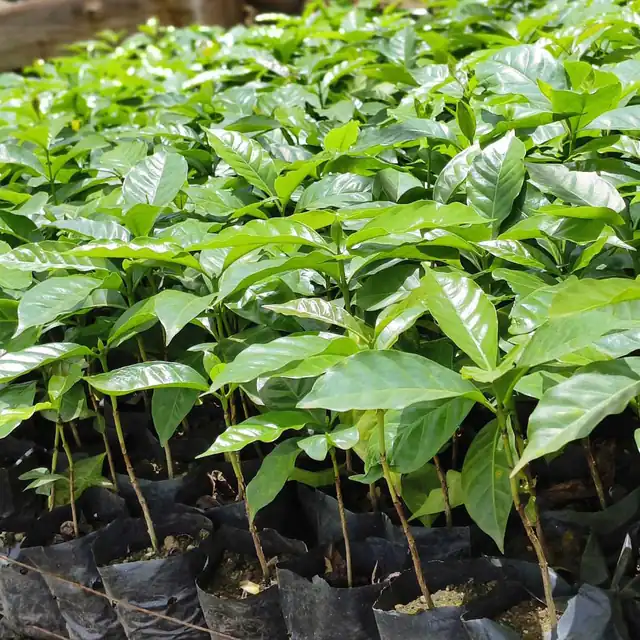
Batian is a tall Kenyan Arabica variety with high yield potential and good cup quality. For farm planning, use 2.1 × 2.5 m spacing, which gives about 770 planting positions per acre before allowing for tracks and boundaries. Batian seedlings at Cultio are seed-grown; ask the nursery to confirm the current batch and availability.
Practical crop-growing guidance for Kenyan farmers. Check site-specific decisions with a qualified local extension adviser.
Batian
Tall, seed-propagated Arabica variety; resistant to coffee berry disease and rated intermediate for coffee leaf rust resistance.
Agronomics
| Year of first production | Year 2 (World Coffee Research profile) |
|---|---|
| Nutrition requirement | Medium |
| Ripening of fruit | Unknown |
| Cherry to green bean outturn | High |
| Planting spacing | 2.1 m between rows × 2.5 m between plants |
| Planting density | About 770 plants per acre before tracks and boundaries |
| Additional agronomic information | World Coffee Research rates Batian intermediate for coffee leaf rust resistance and resistant to coffee berry disease. Field performance and disease pressure vary; confirm local recommendations. |
Background
| Genetic description | Introgressed (other) |
|---|---|
| Lineage | Composite variety with parentage from SL28, SL34, Rume Sudan, N39, KT, SL4 and the Timor Hybrid. |
| Breeder | Coffee Research Foundation, now part of KALRO. |
On this page
Overview
Batian is listed for coffee-growing areas and is one option to consider when planning an Arabica block. At 2.1 × 2.5 m, allow for about 770 planting positions per acre before deducting space for access, terraces and boundaries. World Coffee Research lists Batian as early maturing, with yield and cup-quality potential; it is resistant to CBD and rated intermediate for CLR resistance. These are variety traits, not guaranteed farm results. Actual production depends on site fit, establishment, pruning, nutrition, disease monitoring, picking and the route to market.
Choose a variety
Batian has green or bronze leaf tips and very large beans. It offers high yield potential and very good cup-quality potential at high altitude. World Coffee Research rates Batian resistant to CBD and intermediate for CLR resistance; it is susceptible to nematodes. The profile’s “Low” altitude category is a broad class, not a site recommendation: check the Arabica site requirements below. Treat variety ratings as a guide; yield and cup quality depend on site and crop management.
Site selection
For Arabica coffee in Kenya, assess altitude, temperature, rainfall, soil depth, drainage and acidity together. A practical screening range is 1,200–2,100 m altitude and 15–30°C, with annual rainfall of at least 1,000 mm east of the Rift Valley or 1,145 mm west. Aim for deep, fertile, free-draining soil. Confirm acidity and amendments through a soil test and local coffee advice. These are screening criteria, not a guarantee: measure your actual field, test soil, check water supply and ask an extension adviser about marginal sites.
Planting
Cultio’s standard Batian layout uses 2.1 × 2.5 m spacing, about 770 planting positions per acre before allowing for roads, terraces, boundaries or missing plants. Enter 2.1 m as row spacing and 2.5 m as within-row spacing in the Cultio planting planner. Prepare 60 × 60 × 60 cm holes during the dry season at least three months before planting. Separate topsoil and subsoil, then refill about a month before planting with topsoil and well-decomposed manure or coffee pulp, plus amendments based on soil results. Confirm nutrient rates locally; transplant carefully and water in.
Ongoing care
Keep the block weed-managed, mulched appropriately and accessible for pruning and selective picking. Keep mulch away from the stem and prevent both drought stress and waterlogging. Use soil test results and extension recommendations for nutrition. Follow a consistent pruning and training system, remove damaged or unproductive wood as advised, and record replacements, labour, inputs and flowering. Resistance to CBD and CLR is a useful trait but does not eliminate monitoring or good farm hygiene.
Pests and diseases
Inspect the block regularly for coffee berry disease, coffee leaf rust, insects, root problems and signs of nutrient or water stress. Note symptoms and affected plants before taking action. World Coffee Research rates Batian resistant to CBD and intermediate for CLR resistance. Resistance reduces risk but does not remove the need for scouting and good farm hygiene. Seek a diagnosis from a qualified local adviser and use only crop-protection products registered in Kenya, following label directions, protective measures and pre-harvest intervals.
Harvest
Batian is an early-maturing variety, World Coffee Research lists first production in year two. Treat this as a planning indicator, not a promise of first commercial harvest; site and management affect timing. Pick ripe cherry selectively and deliver promptly under your cooperative or processor’s rules. Record weights, grade, deductions, labour, transport and payment dates. Use net returns and buyer reliability—not variety ratings alone—to decide whether to expand.
Coffee fertilizer, irrigation and pruning
Batian’s profile lists a medium nutrition requirement. A young-coffee feeding schedule uses 50 g CAN per tree at six months, 80 g NPK at one year, 100 g CAN six months later and 125 g NPK at two years. Adjust fertilizer type and rate to soil analysis, crop condition and local advice. These figures are a planning guide, not a substitute for a soil test.
For bearing coffee, schedule NPK ahead of the main flowering and nitrogen after flowering. A common programme splits nitrogen into two applications east of the Rift Valley or three west of it, spaced several weeks apart. Use soil analysis, crop load and local agronomy advice to confirm rates and timing.
Supplement rainfall when young trees are establishing and when flower buds, early fruit growth or ripening coincide with dry conditions. Drip or under-tree irrigation can conserve water; avoid waterlogging.
For smallholder pruning, remove dead and ground-touching branches, open crowded growth and maintain two or three productive heads per stem under the chosen training system. Prune after the main harvest. If a tree is affected by dieback, wait for fresh vegetative growth before pruning.
Coffee cherry harvesting and processing
Pick bright-red ripe Batian cherries selectively. Keep cherry in clean containers, protect it from direct sun and deliver it to the cooperative or factory promptly, ideally on harvest day. Sort out green, overripe, dry, diseased or insect-damaged berries and foreign material, then weigh and record the sorted cherry.
If you process coffee on the farm, pulp freshly harvested cherry with clean, well-adjusted equipment and clean water. Follow the wet mill’s fermentation and grading procedure. Dry parchment evenly on clean raised tables, protect it from rain and re-wetting, and avoid contact with soil. Before storage, check moisture with a calibrated meter; aim for about 10.5–11% moisture before storage and keep dry parchment in a clean, ventilated store and arrange timely delivery to the mill.
Coffee farm records and profitability
Keep a Batian block record for planting date, surviving and productive trees, fertilizer and other input purchases, labour, pruning, disease observations, cherry weights, grades, deductions and payments. Compare production costs with saleable cherry and final payment to estimate cost per kilogram and net return per acre. Use your own seasons of records, buyer terms and labour costs when deciding whether to expand.
Plan your crop for your farm
Estimate planting quantities from your field dimensions, then ask Cultio about batian coffee seedlings and availability.