
KENYAN GROWERS · CULTIO NURSERIES
Dragon Fruit growing guide in Kenya
Plan dragon fruit growing in Kenya with a clear support system, confirmed planting material, pollination checks and a realistic route to market.
Source-based growing information. Confirm variety, rootstock and a site-specific plan with your county extension officer before planting.
On this page
Overview
Treat dragon fruit as a supported fruit crop with an establishment budget, not simply a low-input cactus. List planting material, posts, top frames, ties, water and labour before calculating your order. For a new Kenyan site, begin with a trial block and keep records through flowering and harvest before scaling up.
Choose a variety
Confirm the named variety, flesh colour and propagation method with the nursery. Ask specifically whether the variety needs compatible pollen and whether hand pollination is part of the intended production system. Do not assume fruit colour alone identifies a variety. Keep individual plants or rows labelled so flowering and fruit-set observations can be traced back to the planting material.
Site selection
AFCD describes dragon fruit as a tropical or subtropical crop that needs good soil aeration and is vulnerable to cold damage. Inspect drainage and check the site’s actual temperature history. Cooler, exposed North Rift sites require careful local assessment. A successful planting in a warm area does not establish suitability for an Eldoret farm.
Planting
Install a stable support system before planting. ICAR-CIARI describes a 3 × 3 m post layout with four rooted cuttings per pillar; other systems use different arrangements. At that spacing, an acre has about 450 theoretical support positions before paths, not 450 plants if several are planted at each support. Cultio’s calculator counts planting positions using one plant per position, so adjust the order separately for your agreed plants-per-post system.
Ongoing care
Train stems up the support and manage growth at the top so fruiting branches can hang. Check ties and frames as the canopy gets heavier. AFCD notes that drought tolerance does not remove the need for irrigation, and roots must not sit in water. Write a practical maintenance schedule covering water checks, support inspections and trained growth, then revise it from observations in your trial block.
Pests and diseases
Inspect stems and roots when growth declines, and document damaged areas before removing material. Distinguish problems associated with drainage, physical injury or nutrition from a diagnosed infection. Ask a qualified local adviser to identify persistent symptoms. Keep tools clean and maintain a record of any crop-protection product used, including the label instructions and harvest interval.
Harvest
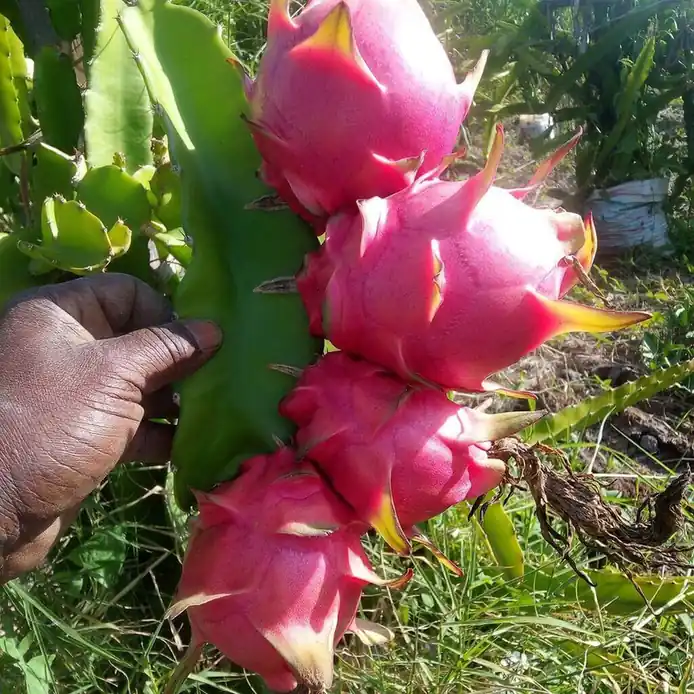
Use cultivar-specific maturity advice and your buyer’s requirements rather than relying on one fixed number of days after flowering. ICAR-CIARI uses skin colour change among its harvest indicators. Record flowering and harvest dates so the farm develops its own useful history. Compare marketable fruit weight with total harvested weight and include the support investment when reviewing business performance.
Sources and further reading
- ICAR-CIARI: dragon fruit production technology (international reference)
- Hong Kong AFCD: cultivation of dragon fruit (international reference)
International references inform planning; they do not establish suitability for a particular Kenyan farm.
Plan your next planting
Discuss your crop, farm conditions and quantity with Cultio in Eldoret. Seedlings are collected from the nursery.
Shop dragon fruit seedlingsCalculate seedling quantities